01Structure
Your process keeps its language.
Projects, types, and states adapt to the domain without forcing the team to translate its work.
Projects can represent product, clients, or operations and adapt views, states, and vocabulary to each domain.

Each capability starts from the same work and retains recognizable references to its context. AI, permission, and activity coverage is stated by status.
04 core capabilitiesLeadership needs progress, the team needs detail, and BIA needs structure. BIKLABS gives each one a different perspective without creating different versions of the truth.
Projects, types, and states adapt to the domain without forcing the team to translate its work.
Dashboards and summaries read the same work items the team updates. They do not depend on a parallel deck.
During preview it can use supported work items and signals to prepare a reading of the project.
Board, list, table, timeline, calendar, and gallery. Six perspectives on the same work items. Filters persist across views. Each team member picks the view that fits them.
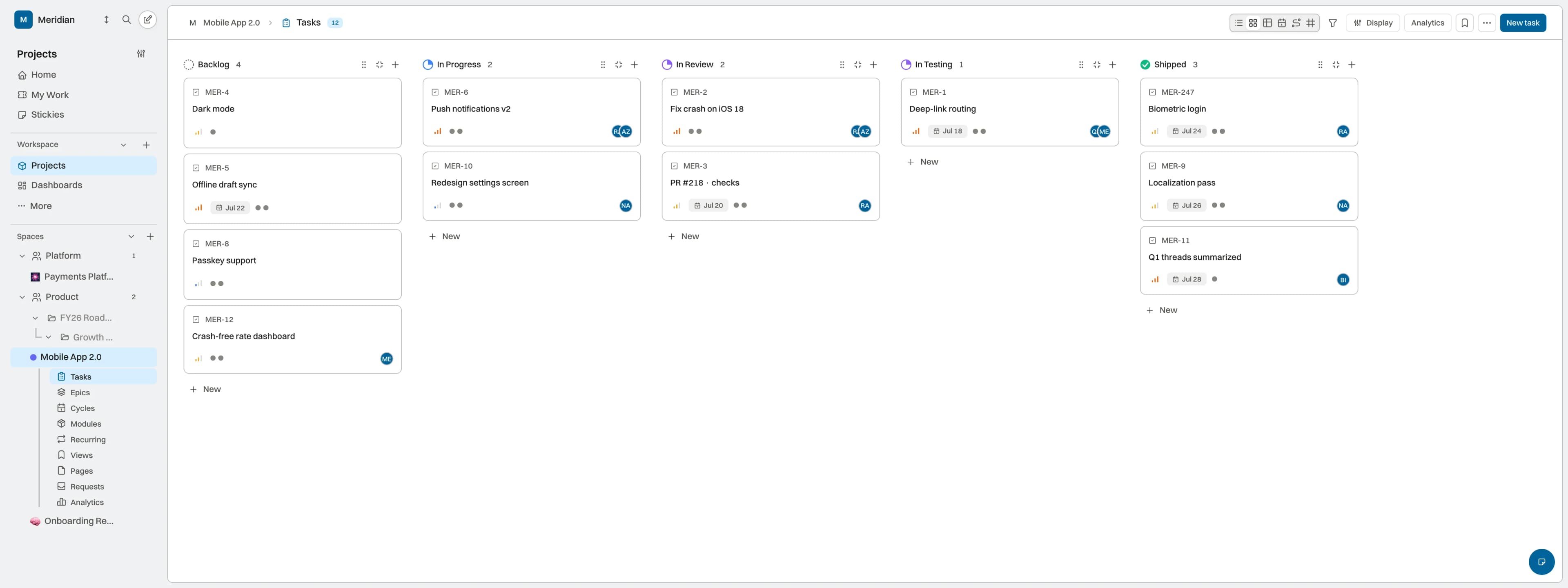
Status, phase, progress, work distribution, cycles, and modules live in one place. BIA can use that same context to explain blockers and prepare the next move.
Analytics brings metrics, charts, and work lists together over project data. Custom dashboards and sharing remain under validation during preview.

Workload, states, priorities, and types become readable signals. BIA can help interpret supported signals within its preview scope.
Workload and capacity by person, team, and project
Work distributed by state, priority, and type
Signals BIA can consult during preview
Direct answers about how this capability fits into the work system.
No. Configure projects, types, states, fields, and views to reflect how your team works. A shared structure keeps the data connected without imposing one methodology.
No. Board, list, table, timeline, calendar, and gallery are perspectives on the same set of work items. A change appears everywhere.
BIA works with the context it can access: work items, states, cycles, related documentation, activity, and relationships. Workspace permissions bound what it can read and do.
Portfolios bring related projects together, while analytics offers signals from available work. Custom dashboards are communicated separately while they remain in preview.
Projects, knowledge, and AI capabilities sharing the same operating context.