01Scope
What is in and out stays visible.
The cycle commitment remains clear even when new requests arrive.
Set the scope, read real progress, and carry learning into the next cycle without losing the context of the work.
Each capability starts from the same work and retains recognizable references to its context. AI, permission, and activity coverage is stated by status.
04 core capabilitiesA cycle creates a time-bound commitment and lets the state of work tell the story. BIKLABS turns real activity into a signal the team can use to decide.
The cycle commitment remains clear even when new requests arrive.
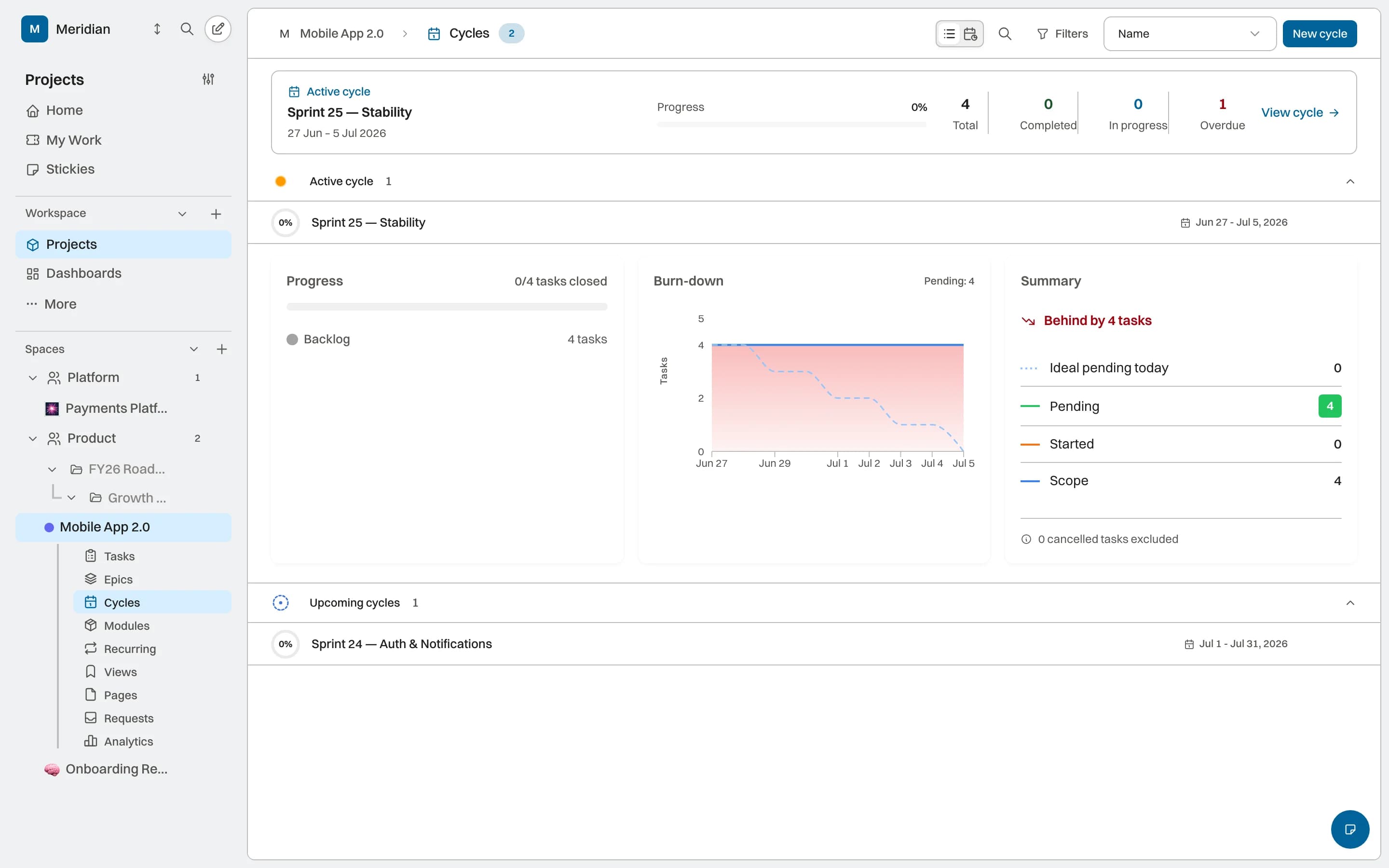
Burndown and velocity come from actual state, not a manual update.
History creates an honest basis for capacity estimates and priority changes.
A cycle brings scope, time, and real progress together. When it ends, learning and unfinished work continue without rebuilding their history.
Burndown starts from the actual state of each work item and compares the ideal trajectory with remaining work. The visual explains how to read that signal; the real cycle list above remains the evidence for the available product.
The objective, dates, and work grouped by state share one view. The team sees what is moving, what is waiting, and what needs attention without rebuilding the sprint.
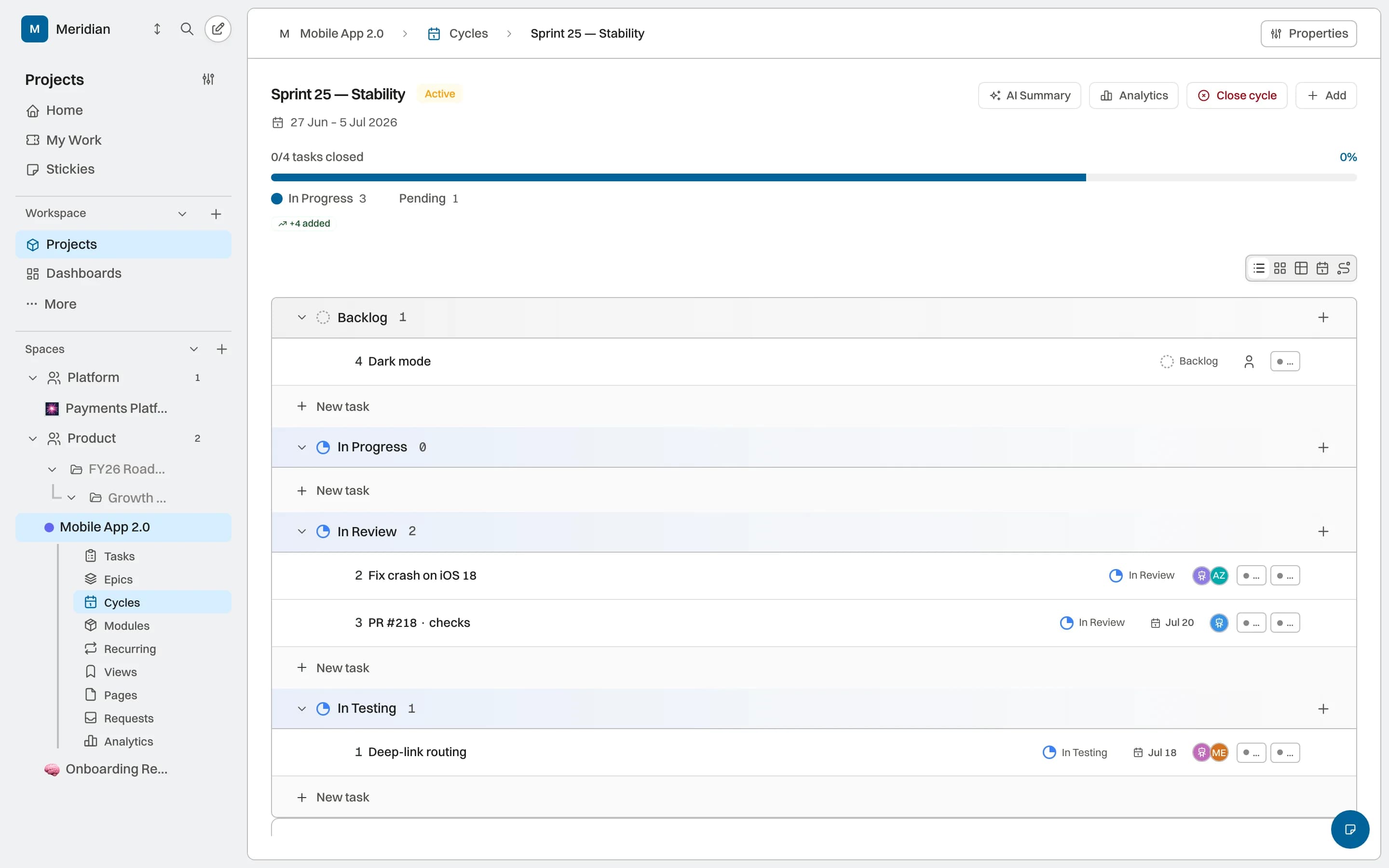
Unfinished work remains the same work item when the team decides to move or replan it. Comments, relationships, and assignments remain at their source.
Dates and previous cycles provide a reference for preparing the next commitment. Future-cycle automation is communicated only when enabled.
Direct answers about how this capability fits into the work system.
No. It can represent an operations week, a fiscal quarter, or a campaign window. Cadence and vocabulary adapt to the team.
From the actual state of work items included in the cycle. It does not rely on someone maintaining a separate progress number.
The team can replan the same work item into another cycle without creating a copy, retaining comments, relationships, and context.
When an agent capability is enabled, it operates on the same supported work items. Agent-specific capacity planning continues to evolve.
Projects, knowledge, and AI capabilities sharing the same operating context.