Intent separates from implementation.
A design decision changes while tasks and documentation retain different versions.
Design, art, code, audio, QA, and production move at different speeds. BIKLABS keeps decisions, builds, bugs, and playtests inside one work system.
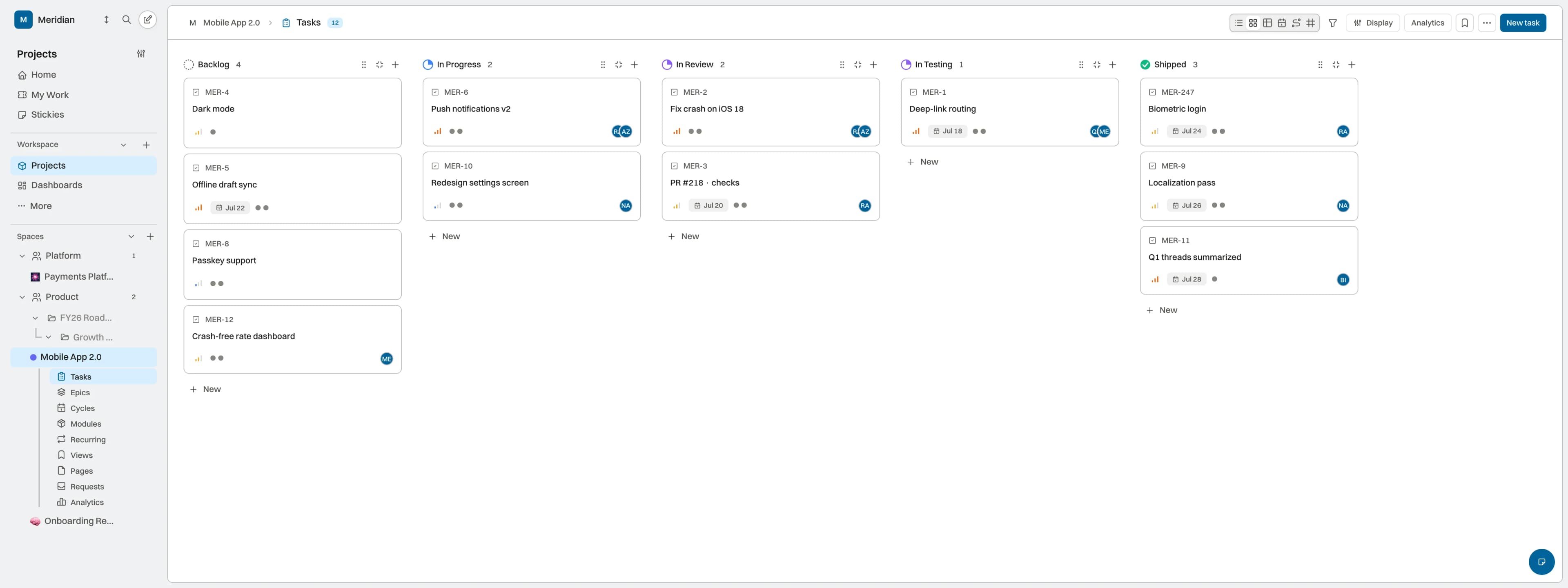
A mechanic depends on code, animation, audio, and validation. If each discipline keeps its own map, production discovers too late what is missing and why it changed.
A design decision changes while tasks and documentation retain different versions.
Art, code, and QA see their queue but not always the dependency preventing integration.
A finding returns as an isolated note without build, system, severity, or decision.
BIKLABS does not replace the engine, repository, or creative tools. It connects the work that explains what must happen between them.
Intent becomes an outcome, criteria, references, and iteration boundaries.
Design, art, code, audio, and QA receive their own work without losing the feature link.
States and owners show what can be integrated and what remains blocked.
Every finding retains its build, context, priority, and production decision.
The release keeps decisions and learning available for the next iteration.
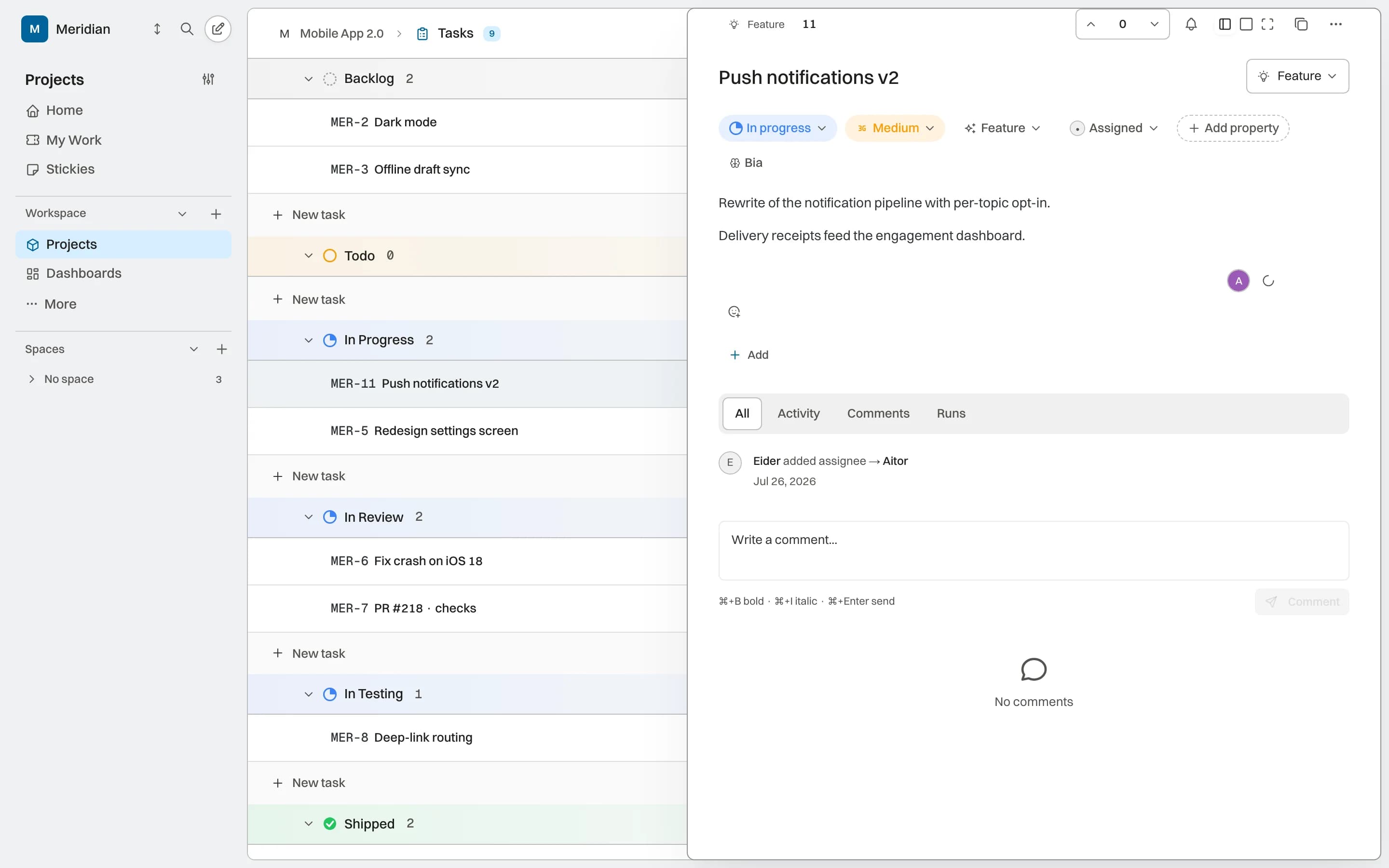
A work item can keep description, state, priority, owner, activity, and related runs. The list preserves context around the detail.
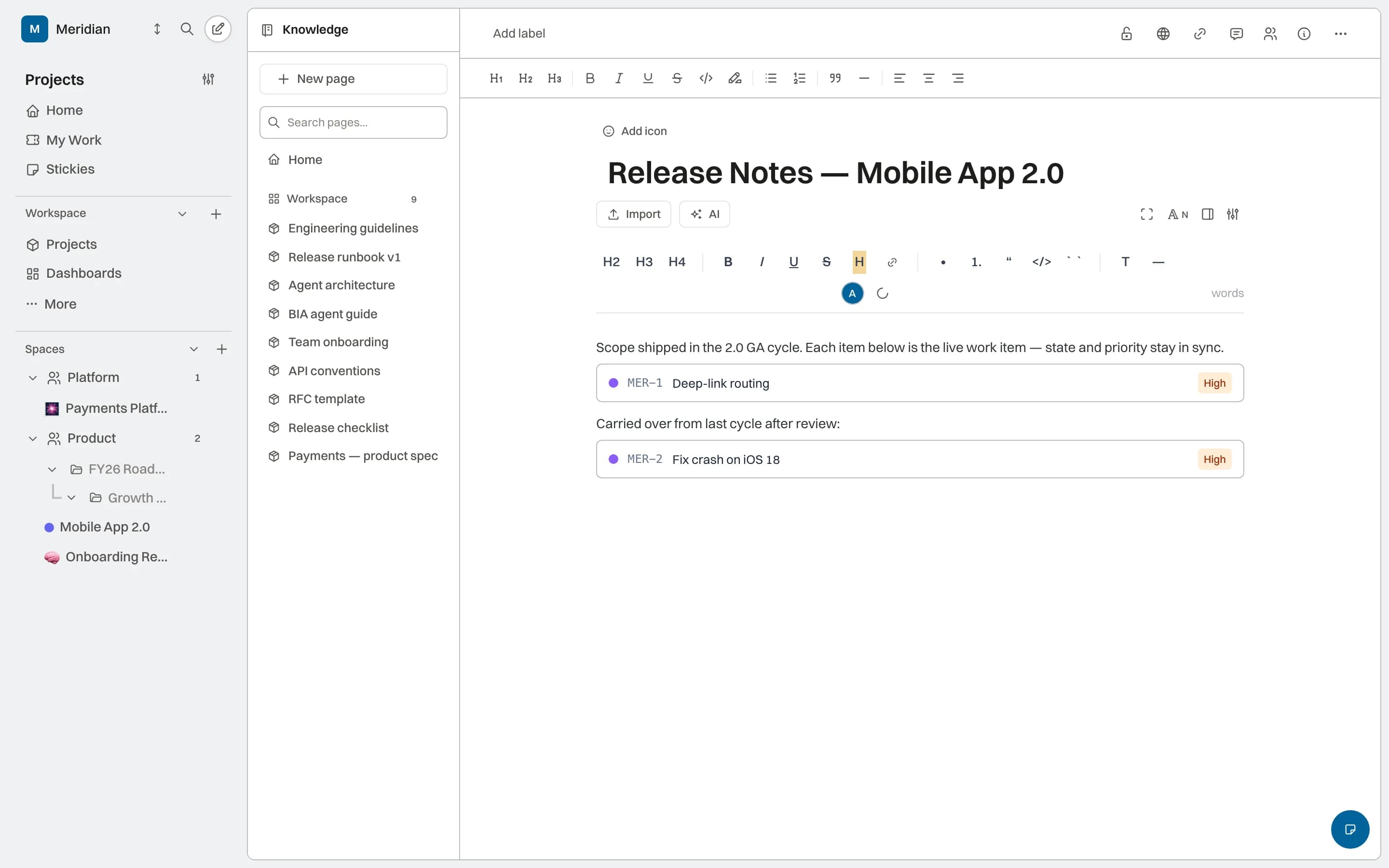
Linked decisions, references, and work reduce the distance between design and execution.
See how the platform fits togetherAn external agent can query and update work within its token and available tools. Creative direction, technical judgment, and release decisions remain human.